- Home
- JOIN
- History
- Maps
- Treaty Forums
- Purpose of the Peace Treaty Forums
- Forum I Jun 1994
- Forum II Oct 1994
- Forum III Sep 1995
- Forum IV Mar 2000
- Forum V Dec 2006 TR Nobel 100th
- Forum VI Dec 2007 with Dennis Ross
- Forum VII Dec 2008 with Samantha Power
- Forum VIII Dec 2009 Obama's Nobel
- Forum IX Nov 2016 Russia-Japan
- Forum X Nov 2019 Jake Sullivan
- Forum XI Sep 2020 Joseph S. Nye Jr.
- Citizen Diplomacy
- Connections
- Spiritual Aspects
- 2005 100th Anniversary
- 2006 Nobel Prize 100th
- 2007 Commemorations
- 2008 Commemorations
- 2009 Commemorations
- 2010 Portsmouth Peace Treaty Day
- 2011 Order of the Rising Sun
- 2012 100 Years of Cherry Trees
- 2013 Historic Marker Dedicated
- 2014 Sister City Celebrations
- 2015 110th Anniversary
- 2016 Commemorations
- William Chandler & Concord, NH
- Kentaro Kaneko & Dublin, NH
- Asakawa, Dartmouth & Hanover NH
- Carey Family & Creek Farm
- Henry Denison & Lancaster, NH
- John Hay & Newbury, NH
- Japanese Visit Manchester, NH
- Wentworth & New Castle, NH
- Portsmouth: Temple Israel, Rev. Clark
- Sarah Farmer & Eliot, Maine
- Adm. Mead & Kittery, Maine
- Elizabeth Perkins & York, Maine
- Educational Resources
- Living Memorial Project
- Contact Us
- 1713 Treaty

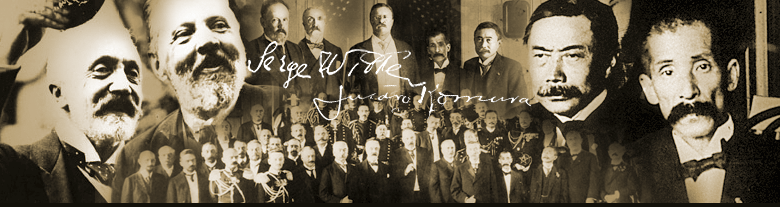
Portsmouth: One of history's great peace negotiations
Ongoing research reveals how the State of New Hampshire, people of Portsmouth and US Navy acted as hosts to the Russian and Japanese delegations in 1905. While President Theodore Roosevelt did not come to Portsmouth, citizen diplomacy played an important role in multi-track efforts that resulted in the Portsmouth Peace Treaty.
Ongoing research reveals how the State of New Hampshire, people of Portsmouth and US Navy acted as hosts to the Russian and Japanese delegations in 1905. While President Theodore Roosevelt did not come to Portsmouth, citizen diplomacy played an important role in multi-track efforts that resulted in the Portsmouth Peace Treaty.
The Treaty of Portsmouth of 1905 stands today as one of history's great peace negotiations. It ended the Russo-Japanese War and marked the emergence of a new era of multi-track diplomacy.
Click here to learn the history of the War and the Peace and view archival 1905 newsreel footage.
Portsmouth Peace Treaty resources include: a detailed exhibit with historical artifacts including documents from Russia and Japan; the Portsmouth Peace Treaty Trail mapping the iconic sites of the Treaty summer; permanent historical markers and this website made possible by The Japan Foundation and recognized by the Library of Congress.
Since the 100th Treaty anniversary in 2005, New Hampshire has celebrated the importance of citizen diplomacy by: enacting unanimous legislation making September 5th "Portsmouth Peace Treaty Day" by Governor's Proclamation; planting cherry trees throughout the state as a Portsmouth Peace Treaty Living Memorial; and hosting programs (through the NH Humanities Council) that perpetuate the history of the Treaty and its example that every person matters.

Living Memorial Cherry Trees -- Gift of Cherry Trees from Japan to the US in Thanks for Assistance Ending Russo-Japanese War
The iconic Washington DC cherry trees were a gift from Japan to the US because of the Portsmouth Peace Treaty. In 2012, the Japan America Society of New Hampshire began planting descendants of those trees gifted by the Japanese Foreign Ministry, at key sites related to the Treaty history, as a living memorial to the Portsmouth Peace Treaty and citizen diplomacy. Read more...
Cherry blossoms in 2018! Read more...
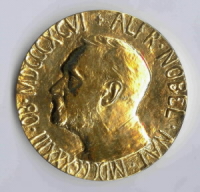
THEODORE ROOSEVELT'S
1906 Nobel Peace Prize:
TR in 1906 won the Prize as President for negotiating the peace between Russia and Japan that produced the Treaty in 1905. For more on Roosevelt's diplomacy, and on the annual commemoration of the anniversary of his Nobel Peace Prize, click here and click here to read the acceptance delivered on his behalf December 10, 1906; and here for the lecture he delivered in Norway himself in 1910.
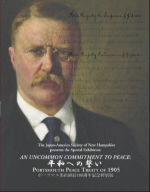
Treaty Exhibit, "An Uncommon Commitment to Peace"
The companion exhibit catalogue (contact info@portsmouthpeacetreaty.org) includes the newly-documented timeline of events during the 30 days the negotiators were in Portsmouth. It also contains images by noted photographer Richard Haynes, of the exhibit artifacts from 1905.
Portsmouth's Sister City: Nichinan, Japan
Nichinan, birthplace of Baron Jutaro Komura, lead diplomat for the Japanese delegation in Portsmouth, established a Sister Cities International agreement in 1985. The cherry trees at Portsmouth City Hall were a gift from Nichinan. Exchange trips between Portsmouth High School and Sister School -- Nichinan Gakuen Jr-Sr High School-- began soon after.

The tradition of commemorating the day of the Treaty signing with bell-ringing began in 1906 when the city celebrated the dedication of a plaque on Building 86 at the Shipyard (above, the site of the formal negotiations), with church bells ringing for a half hour at morning, noon and night.
That bell-ringing is re-enacted each year for Portsmouth Peace Treaty Day, a statewide observance declared in an annual Governor’s Proclamation in celebration of the Portsmouth Peace Treaty anniversary and the role local citizens had in making a difference to the proceedings in 1905.
|
|
|
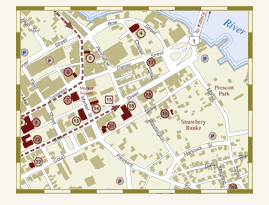
Click on these maps pages to explore the key sites of The Portsmouth Peace Treaty Trail -- from venues for formal conference sessions to informal social settings, identified through original newspaper reports, diaries and letters from event participants -- to bring the 30 days in 1905 to life. |
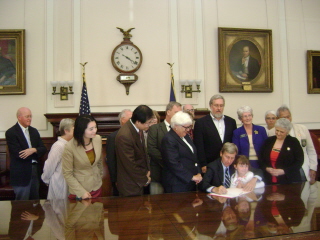
NH Gov John Lynch signs the bill making Sep 5 "Portsmouth Peace Treaty Day" statewide. The little girl is 5 yr old Madison Roscoe, granddaughter of Rep. Valerie Hardy, bill supporter, who brought her "To teach Madison that you have to get involved."
Portsmouth Peace Treaty Day in New Hampshire
Commemorated September 5th
Each year, an official proclamation by the NH Governor "calls on the citizens of New Hampshire to observe the day with appropriate ceremonies and activities commemorating this important piece of New Hampshire history."
NH State Senator Martha Fuller Clark with co-sponsors Senators Bob Odell, John Barnes and Maggie Hassan and NH State Representative Robin Read and House co-sponsors Representatives Jacqueline Cali-Pitts, Laura Pantelakos, David Watters and James Splaine introduced a bill (Senate 379) making September 5th Portsmouth Peace Treaty Day in New Hampshire. For the full text, click here.
The Portsmouth Peace Treaty Forum
The Portsmouth Peace Treaty endures in the Portsmouth Peace Treaty Forum, established in 1994 as an organization committed to exploring diplomatic themes "in the spirit of the Treaty of Portsmouth." The Forum hosts this website, presents lectures and a traveling exhibit (under the auspices of the NH Humanities Council), sponsors special annual events (see Calendar) and presents the Theodore Roosevelt Nobel Peace Prize Commemoration each December. Past guests have included Samantha Power (on citizen engagement in 2008), Dennis Ross (on Statecraft in 2007), Japanese Ambassador Ryozo Kato (who in 2005 on the 100th anniversary said "Diplomats love Portsmouth because here diplomacy actually worked") and Fiona Hill and Graham Allison, who joined Dr. Kimura and Dr. Sarkisov to present a follow-up to their Beyond Cold War to Trilateral Cooperation report. Click here for transcripts of past Forums.
The Forum also supports a Curriculum Guide now in use in schools, an archival record of the 100th anniversary, a bibliography and continued research. For details about 100th anniversary commemorative events, click here.
For a month's view Calendar, click here.
|
Sep 05, 2024 3:30 PM Portsmouth Peace Treaty Day Bellringing |

The Japan-America Society is the 501c3 nonprofit that supports the efforts of the Portsmouth Peace Treaty Forum. To join, click here.
 © Richard Haynes
Haynes Images
For information about ordering fine art prints of this Treaty Centennial symbol, and other commemorative items, click here.

For information about the Russia Society of New Hampshire, write to
PO Box 177
Concord NH 03302-0177
For a Russian-language description of the Treaty exhibit click here.
For the Russian-language Library of Congress description of the Treaty of Portsmouth, click here.
| News and Links |
|
To learn nore, the following books are available: Heroes & Friends: Behind the Scenes of the Treaty of Portsmouth by Michiko Nakanishi Also available: |
An Uncommon Commitment to Peace Exhibit Catalogue published by the Japan-America Society of NH
Blessed Are the Peacemakers: The Service of Thanksgiving for the Portsmouth Treaty, September 5, 1905 by Marina Grot Turkevich Naumann
Original 1905 newsreel footage on DVD
Treaty of Portsmouth 1905-2005 book of reproduction historical postcards.
The Portsmouth Peace Process: Guide for Teachers by Northeast Cultural Coop
Portsmouth Peace Treaty Trail
For hours, directions, details on the Portsmouth Historical Society museum where the Portsmouth Peace Treaty exhibit is displayed, click here.
For hours, directions, details on Strawbery Banke Museum and the Shapiro House, owned by one of the founders of Temple Israel who figured in the Treaty citizen diplomacy, click here.
For information about Portsmouth Naval Shipyard and Building 86 where the formal negotiations were held. click here.
For more information about Wentworth By the Sea Hotel, where both delegations stayed, click here.
For more information about Green Acre Bahai School and Sarah Farmer's commitment to the peace process, click here.
The Portsmouth Public Library maintains an micorfilm archive of local newspapers and an index of the relevant Treaty reporting and other related materials. The archive of original newspapers, photographs and other documents is maintained by the Portsmouth Athenaeum.